Blasted Heath
The Colour Out of SpaceThe Blasted Heath is a five-acre stretch of grey desolation in the woods and fields near Arkham, where nothing has grown since the destruction of the Gardner farm. Its bare, acid-eaten appearance marks the place where an alien colour rose from a well and disappeared into the sky; the remaining ground and persistent local fears suggest that its departure did not end its influence.
Setting and appearance
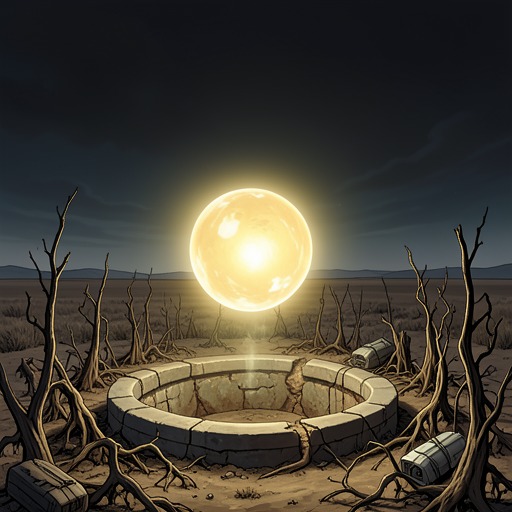
The Heath lies at the bottom of a spacious valley, largely north of the ancient road, though it reaches a little across to the other side. It opens abruptly within the surrounding woodland as a broad, vegetationless expanse of fine grey dust or ash. The dust does not seem to blow away, and the nearby trees are sickly and stunted, with dead trunks gathered at the rim. The scale of the clearing—five acres—makes it less like an ordinary patch of damaged ground than a conspicuous wound in the landscape.
At its edge stand the tumbled bricks of an old chimney, stones from a cellar, and the yawning mouth of an abandoned well. Stagnant vapours from the well distort the hues of sunlight. The contrast between that remnant of a farmstead and the empty grey ground gives the site a material history: a household once stood there, but the Heath preserves almost none of the ordinary signs of habitation.
The farm's destruction and the Heath's formation
The Heath is the enduring aftermath of the catastrophe at the Gardner farm. As the alien colour shot vertically into the sky and vanished through a round opening in the clouds, a final trace was seen rise weakly from the valley and sink back toward the place from which the larger horror had departed. Ammi Pierce recognized it as the same unearthly colour and believed that a remnant still lurked in the well.
By daylight, the farm had left no substantial ruins. The chimney bricks and cellar stones remained, along with scattered mineral and metallic debris and the well's rim. The living things were gone; the dead horse was removed and buried, and the buggy was returned to Ammi Pierce. What remained was the dusty grey expanse, on which, according to the account, nothing has grown since. The Heath is therefore not simply the site of a vanished farm but the visible residue of an event whose last trace may have remained beneath it.
Lingering signs and local effects
The Heath's reputation rests not only on its fixed, barren surface but also on reported changes around it. Rural accounts describe a possible gradual spread of the blight, perhaps by an inch a year. Neighbouring herbage is said to have an altered colour in spring; strange tracks appear in light winter snow; and the snow itself is reportedly never as deep on the Heath as elsewhere. Horses grow skittish in the silent valley, while hunters find that their dogs cannot be trusted near the grey patch.
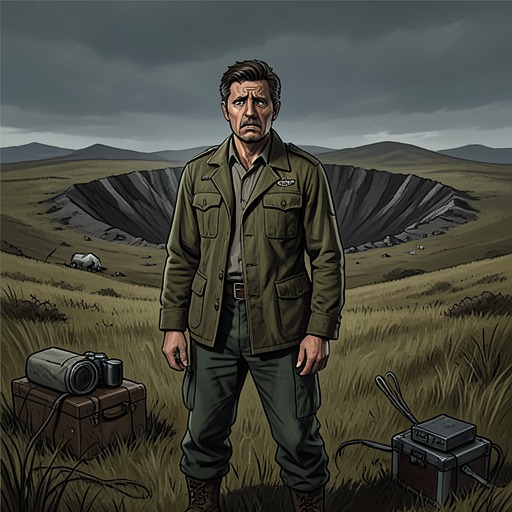
The disused well and the persistent dust remain objects of unanswered questions: the narrator suggests that analysis of their water and material might interest chemists, while study of the stunted border flora might clarify whether the blight is advancing. Such investigations have not resolved the rural reports. Instead, the Heath occupies an uneasy space between observable damage and explanations that local people cannot verify.
People, memory, and significance
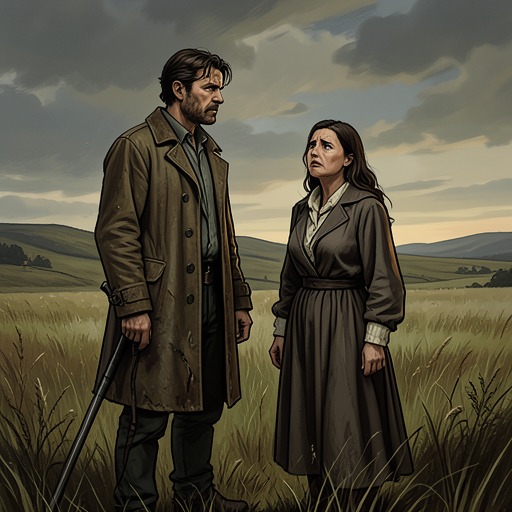
The landscape is associated with the disappearance or death of a family in the 1880s and with the mysterious period locals call the Strange Days. Ammi Pierce, who witnessed the catastrophe, never went near the place again. His fear was sharpened by the sight of the colour's last faint remnant returning to the site; he believed it remained in the well. More than half a century later, the narrator also fears the well's altered sunlight and hopes the reservoir will cover the area, though the depth of the water offers no assurance that it will become harmless.
Local stories also describe psychological effects in the region after Nahum Gardner's taking: people became unsettled and seemed unable to leave, while those considered stronger-minded eventually departed. Foreigners later tried to occupy the crumbling homesteads but did not remain. The Heath thus extends beyond its bare acreage into a wider landscape of abandoned homes and uneasy testimony. Its most important narrative function is to keep the catastrophe present after its apparent climax: the colour has vanished from sight, but the scar, the well, and the reports of changes around them leave open the possibility that something of it persists.